|
My friend Rob Hedden, who I've occasionally mentioned here (often for his deep, abiding love of squirrels...) wrote and directed a movie called You May Not Kiss the Bride. The movie had a nice cast, starring Dave Annable and Katherine McPhee, with a supporting cast of Kathy Bates, Tia Carrere, Rob Schneider, Mena Suvari, Vinnie Jones and Stephen Tobolowsky. The story mostly takes place in Tahiti, and at one point in the film, Rob wanted to have a South Seas-type song to play. There was a piece of music they wanted, but couldn’t get the rights. They ended up getting an original song instead – and the story about how it came about is fascinating. I’d never heard the story, but it came up the other day when Rob was telling me about a family trip he’s about to take to Tahiti, and mentioned the song they got, called “Te Mama Tahiti.” It's a very good song, and it’s remarkable who wrote and recorded it (under a pseudonym), and how it came about. I don’t want to give it away, but here’s a link to the song. Listen to it (at least for a minute, so you can get a sense of it) before I tell you who did this for the movie, which I’ll explain below. Though you might want to listen to the whole thing. It's not that this was done for Rob's movie -- I honestly really like it, and I never would have guessed the artist who wrote and recorded it for them. Okay, the person who wrote this song, arranged it, sang the lead, sang all the background vocals and also played the music for my friend Rob Hedden to use in his movie was --- Rob Hedden! I knew that Rob wrote and sang music. He had a fun, goofy band for a while, Quayton and the Maxiwhackers. But when he sent me this song, I had no idea it was him. About half-way through, I did begin to suspect it might be him singing the lead – but I didn’t think he was all the background vocals (especially since at a few points it sounded like a woman singing, and wasn’t completely sure that he wrote it, or arranged it. The fun story to it is that after the production couldn’t get the rights to the song they wanted, Rob wrote, arranged and did this – but didn’t tell the producers it was all him. He just said that he had a friend who did this and would give it to them for free. (He said the producers really liked the song…but they especially loved that it was free!!) After the producers said that they liked it and agreed that it should be in the movie, only then did Rob tell them that it was all him. And he said that they didn’t believe him! He had to keep trying to convince them, until they did. By the way, the words are all gibberish. They’re real Tahitian words, but don’t mean anything. Which Rob (who is incredibly self-effacing) said is perfect for him. I honestly like the song, a lot. I’ve listened to it at least a dozen times. And I should append one thing I mention above – though it takes place in Tahiti, the movie was filmed in Hawaii. And if you want to see the trailer (it does a reasonable job), here’s the link – Okay, and just because we're honoring Rob today, what the heck, just for the pleasure of the good fellow, here's another squirrel video.
0 Comments
From the archives, and a fun, memorable one. This week’s contestants are Isabella and Francesca Dawas from Minneapolis, MN. And what’s shocking is that they are not twins, which will seem near-impossible as you listen to them, but they only refer to themselves as sisters. It’s possible that they just don’t mention that they’re twins, but it seems unlikely that sisters this giddy, talkative and close wouldn’t leap out to tell you that. As for the game itself, I got the hidden song extremely quickly, and I suspect most people will, since it’s not very well-hidden. As for the composer style, this is one of those areas I don’t know well and I just tossed a coin and guessed someone whose work I don’t know well. To my shock, I was right. I think I’ve guessed this person several times when I’m lost in the weeds, and it’s the first time I was correct. Huzzah!
On this week’s ‘Not My Job’ segment of the NPR quiz show Wait, Wait…Don’t Tell Me!, the guest is country music singer-songwriter Jason Isbell, a four-time Grammy-winner. His conversation with host Peter Sagal is very breezy, quick-witted, self-effacing and fun, which is somewhat unexpected since he’s known for writing sad songs. By the way, not discussed in the interview was how much Isbell said he loved and was inspired by John Prine, growing up listening to his recording, noting that “I value that time that I spent with John about as much as I value anything.” And Prine always said that being the inspiration for Jason Isbell was one of the best compliments he’d gotten. I mention this in particular because when the Country Music Association failed to acknowledge the death from COVID of John Prine – as well as the deaths of Jerry Jeff Walker and Billy Joe Shaver – on the annual CMA broadcast, Isbell and his then-wife, country performer Amanda Shires, both put their admiration to action and publicly resigned from the organization. 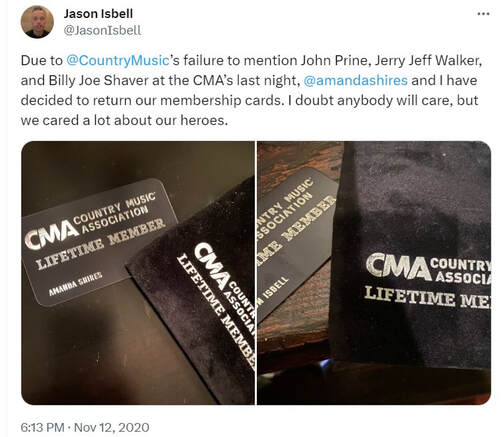 This is the full Wait, Wait… broadcast, but you can jump directly to the “Not My Job” segment, it starts around the 18:15 mark. From the archives. We have a recent repeat this week, with contestant is Claire Nalven from Waltham, Massachusetts. This is a very florid piece, and the song is extremely well-hidden – and to my shock, I got it. And while I came close on the composer style, it was two people I find similar, and I guessed the wrong one.
From the archives. The contestant this week is Brandon Martin from Minneapolis, Minnesota. This was a rarity – I not only was able to get the composer style – and get it before the hidden song, but I got it within a few notes. That’s because the opening is clearly based on a famous piece of music. And I even got the hidden song pretty quickly. I suspect many, if not most people will get both, as well.
From the archives. This week, the contestant is Joseph Gewirtz of Harrisburg, Pennsylvania. For the longest time, while I could tell where the hidden song was, I just couldn't nail it -- and then finally did. (It was quite clear, needless to say, when later played a second time.) My guess for the composer style was not only one of Mr. Gewirtz's guesses, but was born the same year as the composer who was the correct answer, and also the same year of a third even-more renowned composer. And all three wrote in somewhat the same style. The correct answer though is the least-famous of the three.
|


Elisberg Industries gets a commission if you click here before shopping on Amazon.

AuthorRobert J. Elisberg is a political commentator, screenwriter, novelist, tech writer and also some other things that I just tend to keep forgetting.    

Feedspot Badge of Honor
Categories
All
|
 RSS Feed